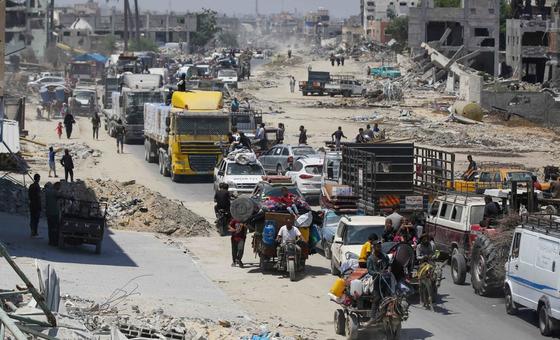
“Thousands are sheltering in UNRWA schools…and government buildings,” the UN agency for Palestine refugees told UN News, adding that others “are already beginning to turn back, telling us of lack of spaces in other areas”.
UNRWA also reiterated warnings that living conditions are “beyond unbearable”, because of the mountains of waste and rubbish piled high alongside roads and near makeshift shelters.
An estimated 85,000 people have left Shujaiyah district in eastern Gaza City in the north of the enclave in the last week, UNRWA noted, while latest data indicates that by Tuesday, at least 66,700 more Gazans had been displaced from eastern Khan Younis and Rafah, both in the south, following new evacuation orders issued on Monday evening.
Pitiful shelters and trash
Beyond the UN’s premises-turned-shelters, many more thousands of families now live “in the skeletons of bombed-out buildings or among piles of trash”, UNRWA said, before echoing warnings from the UN health agency, WHO, of a rise in communicable diseases including diarrhoea and hepatitis, particularly among malnourished children with weakened immune systems.
“Military action in the Khan Younis area could further hamper people’s access to safe water at a time when the lack of sanitation is significantly contributing to the spread of disease,” UNRWA insisted.